Inside the KLOW peptide stack
Four research histories, an uneven share of the mixture, and a protein fragment that needs its full name.
KPV: the addition to GLOW
The KLOW peptide stack adds KPV to the GHK-Cu, BPC-157 and TB-500 combination known as GLOW. KPV is the component most directly tied to the blend’s anti-inflammatory framing. Intestinal-cell and mouse experiments connect it with lower inflammatory signalling and less severe colitis.
The specificity becomes clearer in Getting’s work on KPV and related hormone fragments. KPV reduced white-cell accumulation in a mouse inflammation model, yet it did not suppress cytokine release from cultured macrophages in vitro. Macrophages are immune cells, and cytokines are the chemical messages they release. I prefer that awkward result to a blanket description of immune calming: the responses separate when examined closely.
BPC-157: from gastric protein to tendon
The name expands to Body Protection Compound 157. Its synthetic sequence derives from a gastric-juice protein, and its repair reputation rests heavily on animal work. In the rat Achilles tendon experiment, investigators assessed mechanical strength, function and tissue appearance after a complete tendon cut.
Those are substantial measurements for an animal model. Calling the work impressive seems fair to me; interpreting it as proof of a repaired human shoulder goes beyond the subjects and injury studied. Human evidence includes the small intravenous safety pilot, which pursued a different question entirely.
TB-500 and full-length thymosin beta-4
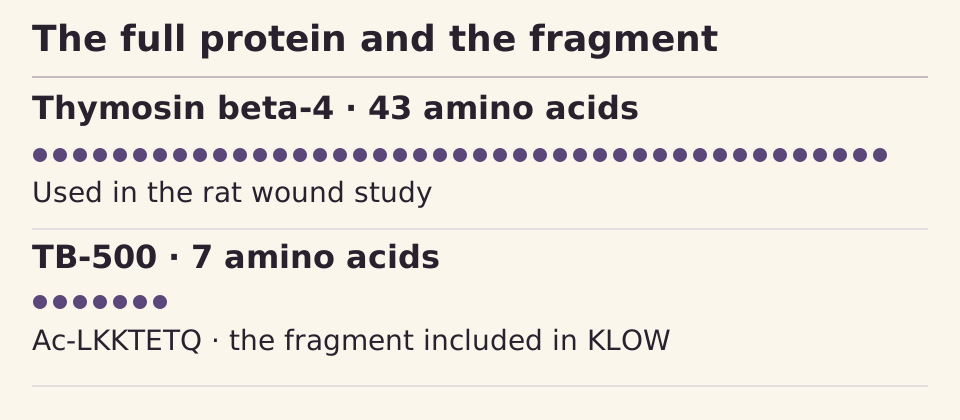
The TB-500 fragment is a seven-amino-acid chain, Ac-LKKTETQ, associated with the parent protein’s actin-binding region. Actin is part of a cell’s internal framework and helps it move. Full-length thymosin beta-4 is 43 amino acids long and has activities beyond that short region.
The 1999 rat wound results belong to full-length thymosin beta-4: 42% greater new skin coverage at four days and 61% at seven days versus saline. Those percentages often sound like the strongest item in the blend’s file. Their actual subject deserves equal prominence. I won’t credit the fragment with every activity of the full protein simply because the names travel together.
The 2026 musculoskeletal review provides broader context for the limited human safety evidence around these unapproved peptides.
KLOW vs GLOW
The ingredient difference is KPV. There is no controlled head-to-head study establishing that KLOW provides greater benefit than GLOW, and no controlled experiment has established the added value of the full KLOW stack over its subsets.
Community comparisons sometimes credit the extra KPV with less aching or improved gut comfort. These are anecdotal accounts rather than clinical evidence, with unverified contents and no comparable control group. The reported-effects page gives those accounts room without turning them into a ranking of blends.
I’d welcome a comparison capable of disappointing the blend’s advocates as readily as supporting them. An ingredient rationale becomes more useful when it survives that possibility.